
Deliberate Practice in Math: How to Make Intervention Time Count
Finding time for math intervention is only part of the challenge. Within that time, educators need to identify what each student needs, teach the relevant skills, provide meaningful practice, and determine whether the instruction is working. Each step matters, and each competes for space in an already full school day.
Deliberate practice gives those steps a consistent, proven structure. Students work toward a specific goal, receive feedback, reflect, and try again. For educators, that cycle creates a clearer connection between the practice students complete and the progress they need to make.
What is deliberate practice?
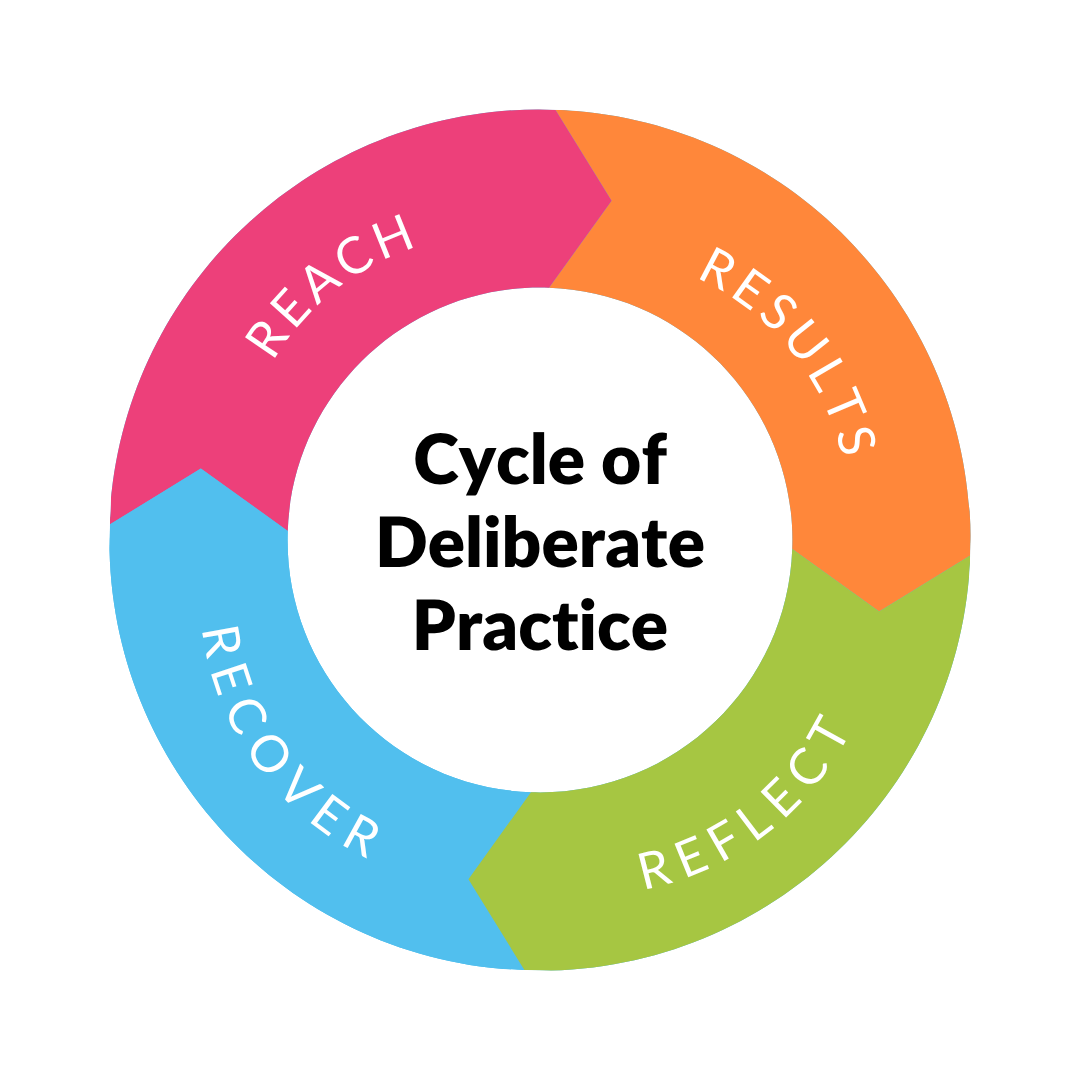
Deliberate practice is a method for developing expertise that is designed as structured practice “loops” or rounds. Four core principles sit at the heart of these deliberate practice loops.
The Four Rs of Deliberate Practice
- Reach: Students repeat targeted practice at the edge of their abilities, i.e., an “appropriately challenging” level. This is a ‘sweet spot’ for growth: challenging enough to stretch students’ skills while remaining achievable, giving them opportunities to experience success and build confidence.
- Results: Students receive immediate feedback on their performance in the targeted practice. This is a central component of deliberate practice. Constant measurement and feedback allow students to immediately recognize areas for improvement for the next round of practice.
- Reflection: Students think back on their experience and set goals for the next learning or practice round. Research shows metacognition leads to higher academic achievement and long-term information retention.
- Recovery: Students take breaks between learning cycles to recover. This is a critical step for preventing fatigue and helping students return to practice with renewed focus.
Why deliberate practice is effective in math
It builds confidence by replacing rote repetition with purposeful practice
For students who have struggled in math, another page of similar problems can feel like another opportunity to get things wrong. Repetition alone gives them little direction if they do not understand how to improve. Deliberate practice gives each attempt a purpose: use a strategy, get feedback, and work toward a manageable next step.
Research by Albert Bandura and Dale Schunk found that children working toward short-term goals developed stronger arithmetic skills and a greater sense of their own capability. The practical lesson is to make progress visible and attainable. Repeated practice still matters, but each round should help students understand what they are working on and how they are getting better.
It connects procedures with mathematical understanding
Students need opportunities to understand why a method works and practice using it. Deliberate practice can bring those together by asking students to apply a taught strategy, explain a step, and use the same relationship in a related problem.
For example, a student can use 5 × 7 to solve 6 × 7 by adding another group of seven. That relationship also provides a foundation for breaking apart larger multiplication problems. In a study of 58 fourth-grade students, John Woodward found that combining strategy instruction with timed practice generally produced better results on tasks involving extended facts and approximation than timed practice alone. Both groups improved their multiplication fact automaticity.
The implication extends to how educators design practice: include opportunities to connect a procedure to a mathematical idea, alongside opportunities to become more efficient at using it.
Feedback and reflection turn mistakes into useful next steps
An incorrect answer can reveal a misconception, an inefficient strategy, or a missed step. Immediate feedback helps students identify what happened and make a correction while their thinking is still fresh. The What Works Clearinghouse mathematics intervention guide recommends having students correct errors using an efficient strategy during fluency activities.
Reflection helps students carry that correction into their next attempt. Questions such as “Where did you get stuck?” and “What will you do differently next time?” encourage students to explain their thinking and choose a specific next step. In a study of students in grades three through five, Bethany Rittle-Johnson found that self-explanation helped students learn and remember a procedure for mathematical equivalence and apply their learning to new problems.
Together, feedback and reflection give each practice round a connection to the next. Students have an opportunity to understand their mistakes, adjust their approach, and try again, while teachers gain insight into where additional instruction is needed.
Tips for implementing a deliberate practice model in your math intervention
1. Give each practice round a specific purpose
Identify what students should improve during the round. That could be using a particular strategy more accurately, completing a process with less assistance, or recognizing when to apply a skill. Make the goal clear to students so they know what to pay attention to as they practice.
Keep the focus manageable. A narrow target makes it easier to choose appropriate problems, provide useful feedback, and recognize progress.
2. Choose work that stretches students without overwhelming them
Start with tasks that build on something students can already do but still require concentration and effort. Students should have a way to approach the work, even if they cannot yet complete it consistently or independently.
Adjust based on what you observe. If students repeatedly guess or cannot get started, provide guidance or simplify the task. If they complete everything easily, increase the challenge. The difficulty should change as their skills develop.
3. Pinpoint the error, then give students another try
When a student answers incorrectly, focus feedback on the specific step or decision that needs attention. A prompt such as “You regrouped a ten into ten ones. Check whether you updated the number of tens,” gives them something concrete to act on. If they cannot identify the error, explain or demonstrate the correction.
Then have the student retry the problem and attempt a similar one independently. This gives them an immediate opportunity to use the feedback and lets you check whether it helped.
4. Keep reflection brief, targeted, and connected to the mathematics
Reflection can fit into the final minute of a lesson. Ask students to name a strategy they used, show where it helped, or explain what they will do when they encounter a similar problem. Tie the next goal to that example.
You can also use reflection workpages like BlueStreak’s Reflect and Learn activities to record student reflection and goal setting on paper, where they can easily revisit it later.
5. Be strategic about recovery periods
Give concentrated practice a clear stopping point and allow students to reset afterward, or when you notice fatigue or frustration interfering with the quality of practice. Depending on the activity and the student, that might mean a brief stretch, a pause, or a change of pace.
6. Help students recognize their own progress
Compare students’ current performance with their earlier attempts. Point out specific improvements, such as fewer errors, less reliance on prompts, or more consistent use of a strategy.
Invite students to notice those changes, too. Recognizing what improved—and what they did to make it happen—gives them a concrete starting point for their next goal.
7. Consider adaptive digital tools for just-right challenging practice
More digital practice isn’t always better, but consistently providing “just-right challenging” practice for every student is difficult to manage without it. Students need different levels of challenge, and those needs change as they progress. Adaptive digital tools can make that differentiation manageable by adjusting practice based on each student’s performance.
These tools can also help educators quickly spot learning gaps and persistent errors, making it easier to identify who needs additional guidance and where to focus it.
BlueStreak's turnkey intervention system is built on deliberate practice
Putting this cycle into place is easier when practice, performance data, and instructional materials are connected and don’t require hours of teacher planning time.
BlueStreak Math is built on a deliberate practice model, and combines an adaptive digital platform with pencil-to-paper worktexts to make it easy to identify and close foundational fluency gaps in your math intervention.

- Adaptive learning games provide appropriately challenging practice and immediate feedback in an engaging, low-anxiety format.
- Automatic intervention groupings identify students who may be stuck on certain skills and who might benefit from direct instruction and targeted practice.
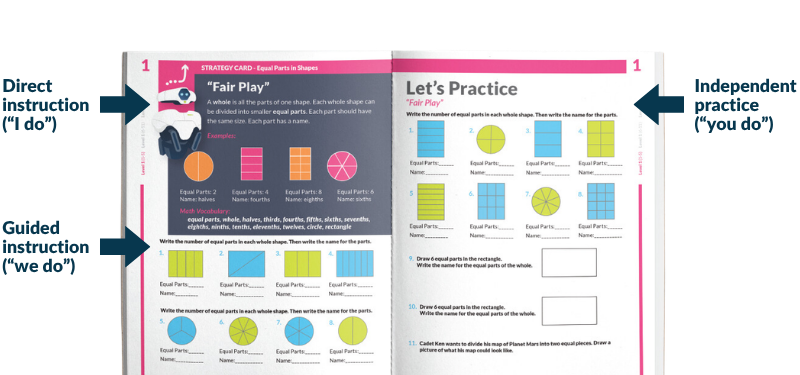
- Scaffolded mini lessons that map to intervention groups make it easy to correct misconceptions and keep progress from stalling, with turnkey direct instruction, guided practice, and independent practice.
- Guided print metacognition activities prompt students to reflect on their learning and set goals for next time that they can easily revisit later.
- Progress data and heatmaps help students and teachers easily visualize progress to build confidence and motivation.
- Custom progress monitoring is integrated directly with the rest of the platform and allows teachers to measure growth at the grade, class, small group, or individual level and use the results to adjust intervention.
For more on the research and instructional ideas behind this approach, read BlueStreak Math: Math Fact Fluency, our white paper by Robin J. Fogarty, PhD, and Brian M. Pete.
Schedule a demo to see how BlueStreak’s deliberate practice cycle can fit into your school’s math intervention routine.
